
Part 1: The defense of Anarchism
Something you'll notice if you research Anarchism from the Anarchists perspective is that they have real life examples of Anarchism to back up their ideology. Republican Catalonia, the Zapatistas, Makhnovshchina, Rojava, Shinmin Autonomous Region, the Paris commune, and the Free Territory of Carnaro are commonly cited. But you may also notice that all of these (except for the Zapatistas but we'll get to that in a moment) no longer exist, only existed in small territories (the largest being Makhnovshchina, which as you can see in the map below was pretty small as far as countries go), and barely lasted that long anyways.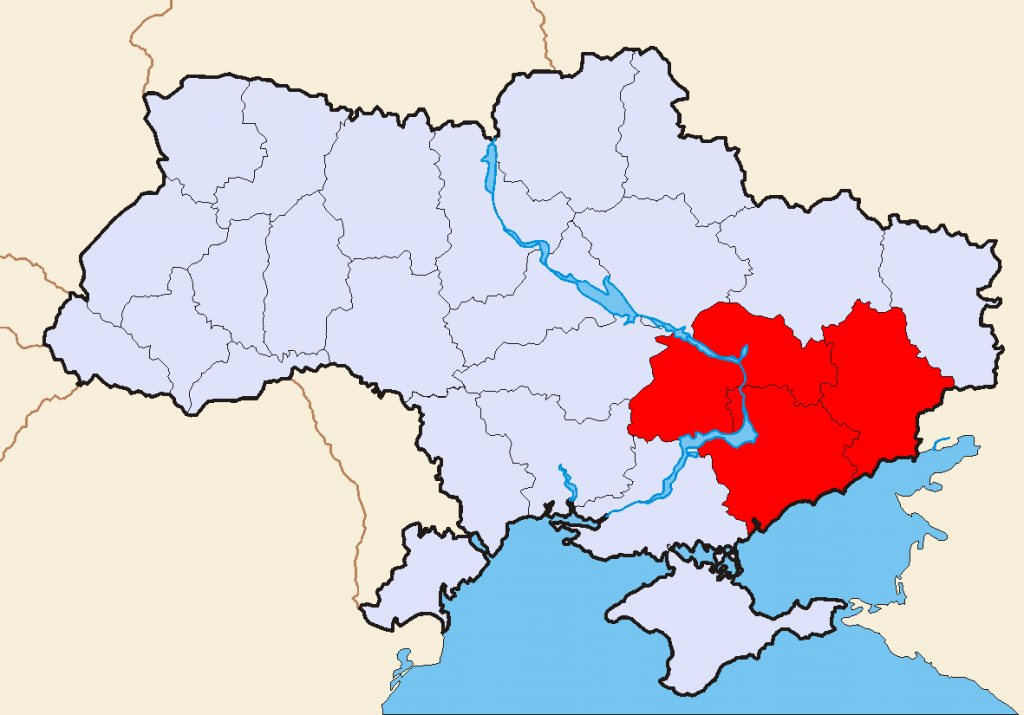 This is because all of these regimes were unable to defend themselves against adversarial forces and subsequently collapsed due to military defeat, with the
exception of Rojava which not only relied on US military support in their fight against ISIS (thus making them simply a US neo-colonialist proxy, lol) but is
currently being BTFO'd by Turkey and its future is bleak.
As for the Zapatistas, they aren't even Anarchist.
They can best be described as Libertarian Socialist, and they enforce a system of laws which even include the complete prohibition of drugs and alcohol.
This is because all of these regimes were unable to defend themselves against adversarial forces and subsequently collapsed due to military defeat, with the
exception of Rojava which not only relied on US military support in their fight against ISIS (thus making them simply a US neo-colonialist proxy, lol) but is
currently being BTFO'd by Turkey and its future is bleak.
As for the Zapatistas, they aren't even Anarchist.
They can best be described as Libertarian Socialist, and they enforce a system of laws which even include the complete prohibition of drugs and alcohol.
Part 2: Mutual aid
Mutual aid is a concept often used in Anarchist theory referring to the mutual cooperation of people without hierarchy. Kropotkin (one of the most foundational Anarchist thinkers) wrote extensively about this topic in his book Mutual aid, where he lists examples throughout animal and human culture of mutual aid, which are often used by Anarchists to supposedly prove that society can be maintained without hierarchy. In the first two chapters he delves into further detail about how animals utilize mutual aid. The problem with this is that animals have completely distinct interests and reasons for doing things than humans do. For example he uses examples of mutual aid from bees and ants, despite bees and ants being extremely collectivist to the point of being completely willing to die for the good of the hive. In the next chapter he documents mutual aid among savage peoples. While they did indeed engage in altruistic acts, it is worth noting that:- they only lived within their small tribes, meaning that cooperation ensured their direct happiness
- primitive races of people which Kropotkin mentioned were often primitive by that point because they were extremely retarded (bushmen and aboriginal australians were prominent examples which he gave. Bushmen have an average IQ of 55 while aboriginals have an average IQ of 62) to the point that these examples are irrelevant for the same reason that the example of the animals was. They lack the ability to make cognitive decisions, and while technically human are dumber than many types of animals, even many species of birds.
Part 3: The abolition of power
Power cannot possibly be "abolished". In industrial society someone having enough weapons or control over certain infrastructure automatically gives him the ability to subordinate others. Even excluding industrial means, one can utilize (for instance) strength or blackmail. A disabled person, whether he likes it or not, is at the whim of those around him. And you can argue that the point isn't so much the abolition of power necessarily, moreso returning power to the people, but my points about the natural hierarchies that emerge from strengths, weaknesses, sociality, positions which give you power (for example a nuclear scientist in charge of a nuclear plant), and tools still apply.Part 4: Mob rule
A concept frequently cited in Anarchist discussions is "direct democracy", meaning that rather than the majority voting for change in an Anarchist society change would be determined by people themselves carrying it out. Thus it would be mob rule in the literal sense of the term. I feel that people who advocate for "direct democracy" have never been in a situation where they were wrongfully accused of something but people still believed in it anyways. Especially when on subreddits such as r/Anarchy101 people ask what an anarchist community would do if someone was raped people just say that the solution would be analogous to "prison justice". So people are going to brutally murder people because they heard a rumor? There is nothing fair or just about such a system.Part 5: Christian Anarchism is contradictory to the Bible
This critique only applies to Christian Anarchists (which are apparently a real thing). If you know much about the Old Testament you would know that it explicitly advocates for the government to exist as an institution:Appoint judges and officials for each of your tribes in every town the Lord your God is giving you, and they shall judge the people fairly. Do not pervert justice or show partiality. Do not accept a bribe, for a bribe blinds the eyes of the wise and twists the words of the innocent. - Deuteronomy 16:18-20
A wise king winnows the wicked and drives the wheel over them. - Proverbs 20:26
One might try to argue that these were apart of the mosaic law, however as seen in the New Testament these laws are still continued:
Let everyone be subject to the governing authorities, for there is no authority except that which God has established. The authorities that exist have been established by God. Consequently, he who rebels against the authority is rebelling against what God has instituted, and those who do so will bring judgment on themselves. For rulers hold no terror for those who do right, but for those who do wrong. Do you want to be free from fear of the one in authority? Then do what is right and you will be commended. - Romans 13:1-4
Submit yourselves for the Lord’s sake to every human authority: whether to the emperor, as the supreme authority, or to governors, who are sent by him to punish those who do wrong and to commend those who do right. - 1 Peter 2:13-14